De connectiviteit tussen alle bedrijfskritische apparaten vereenvoudigen

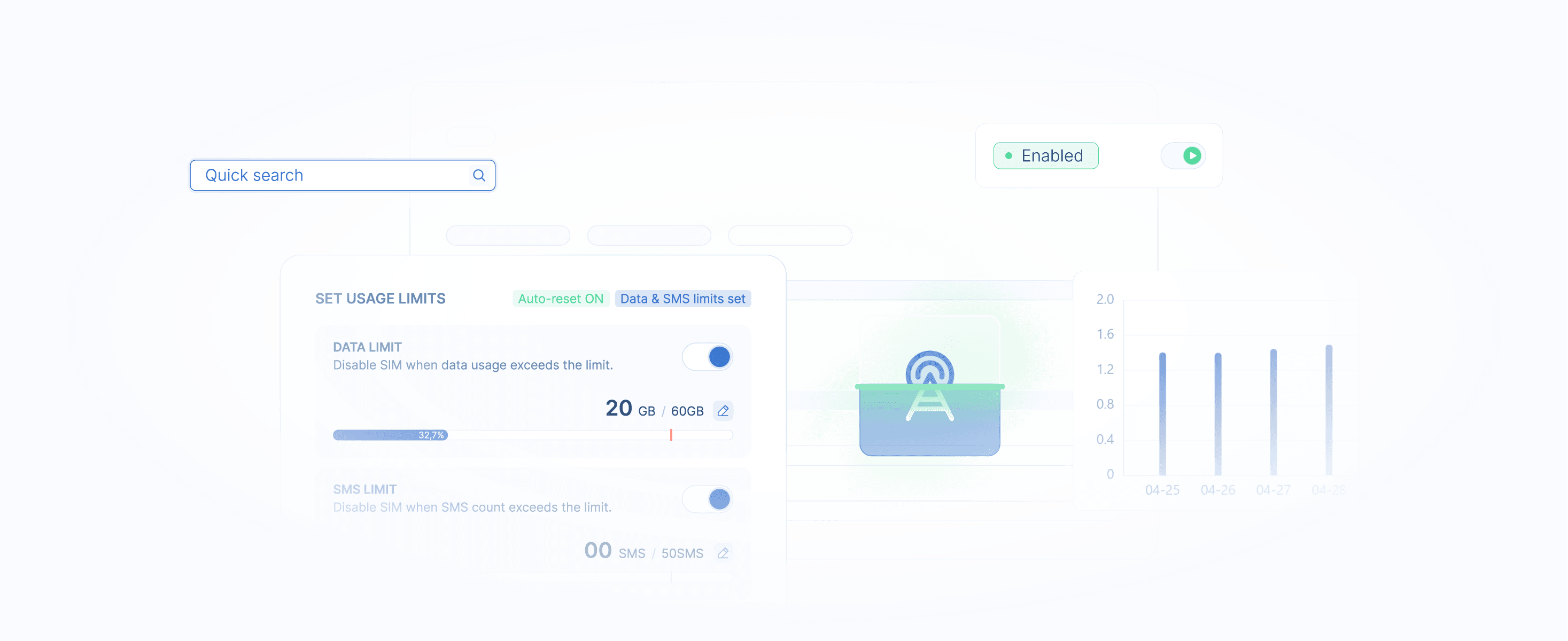
Implementeer, beheer, monitor en automatiseer connectiviteit vanuit één platform. Verminder de complexiteit van providers, krijg realtime inzicht en houd elk aangesloten apparaat onder controle.

  • One SIM icon

    Eén simkaart

    Meer dan 180 landen · uitwijking naar meerdere netwerken

  • Form factor icon

    Elke vormfactor

    2FF, 3FF, 4FF, MFF2, eSIM (eUICC)

  • Protocol icon

    Elk protocol

    OCPP 1.6 · OCPP 2.0.1 · MQTT · TLS

  • Scale icon

    Elke schaal

    Geen maandelijkse minimumkosten per simkaart

De realiteit achter de cijfers

Hoeveel data verbruikt een bedrijfsapparaat eigenlijk?

Bij implementaties op het gebied van bedrijfsmobiliteit is er zelden sprake van een „typische” gegevensbehoefte. Een laptop die door een medewerker op afstand wordt gebruikt, een robuuste handheld-scanner voor voorraadbeheer, een kiosk in de detailhandel die transacties verwerkt en de tablet van een buitendienstmedewerker genereren allemaal verschillende hoeveelheden dataverkeer. Het maandelijkse verbruik hangt af van de gebruikte applicaties, updates van het besturingssysteem en beveiligingsupdates, cloudsynchronisatie en of mobiele data de primaire verbinding is of alleen als back-up dient wanneer er geen wifi beschikbaar is. De onderstaande voorbeelden bieden een algemeen uitgangspunt voor het plannen van implementaties van bedrijfsmobiliteit.

Type apparaat
Typische maandgegevens
Wat bepaalt het gebruik?
Tablets voor buitendienstmedewerkers
500 MB – 5 GB
Veldapps, formulieren, kaarten, het uploaden van afbeeldingen
Bedrijfslaptops
5–30 GB+
VPN, cloudtoepassingen, videovergaderingen, het synchroniseren van bestanden
Robuuste handhelds
100–500 MB
Voorraadbijwerkingen, barcodescans, synchronisatie van taken
Verkoopkiosken
500 MB – 3 GB
Transacties, bewaking op afstand, software-updates
Mobiele POS-apparaten
250 MB – 2 GB
Betalingsverwerking, kassabonnen, voorraadopzoekingen
Type apparaat
Typische maandgegevens
Tablets voor buitendienstmedewerkers
500 MB – 5 GB
Bedrijfslaptops
5–30 GB+
Robuuste handhelds
100–500 MB
Verkoopkiosken
500 MB – 3 GB
Mobiele POS-apparaten
250 MB – 2 GB
Tablets voor buitendienstmedewerkers
Bedrijfslaptops
Robuuste handhelds
Verkoopkiosken
Mobiele POS-apparaten

Deze waarden zijn representatief voor Europese en Noord-Amerikaanse installaties die Simbase in de praktijk waarneemt. Het daadwerkelijke verbruik hangt af van de OCPP-implementatie, de frequentie van de telemetriegegevens en de functies die bij de lader zijn inbegrepen (scherm, camera, betalingsfunctie, DCS). Controleer deze cijfers aan de hand van uw eigen telemetriegegevens voordat u een abonnement afsluit.

Waar de connectiviteit op het gebied van bedrijfsmobiliteit tekortschiet

Drie uitdagingen op het gebied van connectiviteit die de implementatie in bedrijven vertragen

De complexiteit van regionale luchtvaartmaatschappijen

Uitbreiding naar nieuwe kantoren, regio’s of landen betekent vaak dat er een extra relatie met een provider, een nieuw tariefplan, een nieuw ondersteuningsproces en een nieuw factureringssysteem moet worden beheerd. Naarmate de implementaties toenemen, wordt het beheer van de connectiviteit voor IT-teams steeds complexer.

Beperkt zicht wanneer apparaten offline gaan

Wanneer een laptop, tablet of handheld de verbinding verliest, moet de IT-afdeling snel vaststellen of het probleem bij het netwerk, de simkaart, het apparaat of de gebruiker ligt. Zonder de juiste diagnostiek wordt het oplossen van storingen een handmatig proces dat de uitvaltijd en de ondersteuningskosten doet toenemen.

Het opschalen van implementaties vergt te veel handmatig werk

Het in gebruik nemen van een handvol apparaten is eenvoudig. Het uitrollen van honderden of duizenden bedrijfsapparaten is dat echter niet. Het activeren, toewijzen, opschorten en opnieuw inzetten van connectiviteit binnen verspreide teams kan zonder gecentraliseerd beheer al snel een operationele last worden.

Wat Simbase je biedt

Een connectiviteitslaag die is ontwikkeld voor gedistribueerde apparaatparken

  • Multi-IMSI · eSIM

    Deploy globally with one SIM strategy.

    Use one SIM or eSIM solution across supported markets with intelligent multi-network connectivity. Simplify regional rollouts, support traveling employees, and reduce the need to source different carriers for every deployment.

  • Manage every device from one platform.

    Provision, suspend, organize, and monitor connectivity across laptops, tablets, rugged handhelds, kiosks, and other enterprise devices. Give IT complete visibility into usage, connectivity status, and diagnostics without logging into multiple carrier portals.

  • API · Webhooks

    Automate connectivity across your IT workflows.

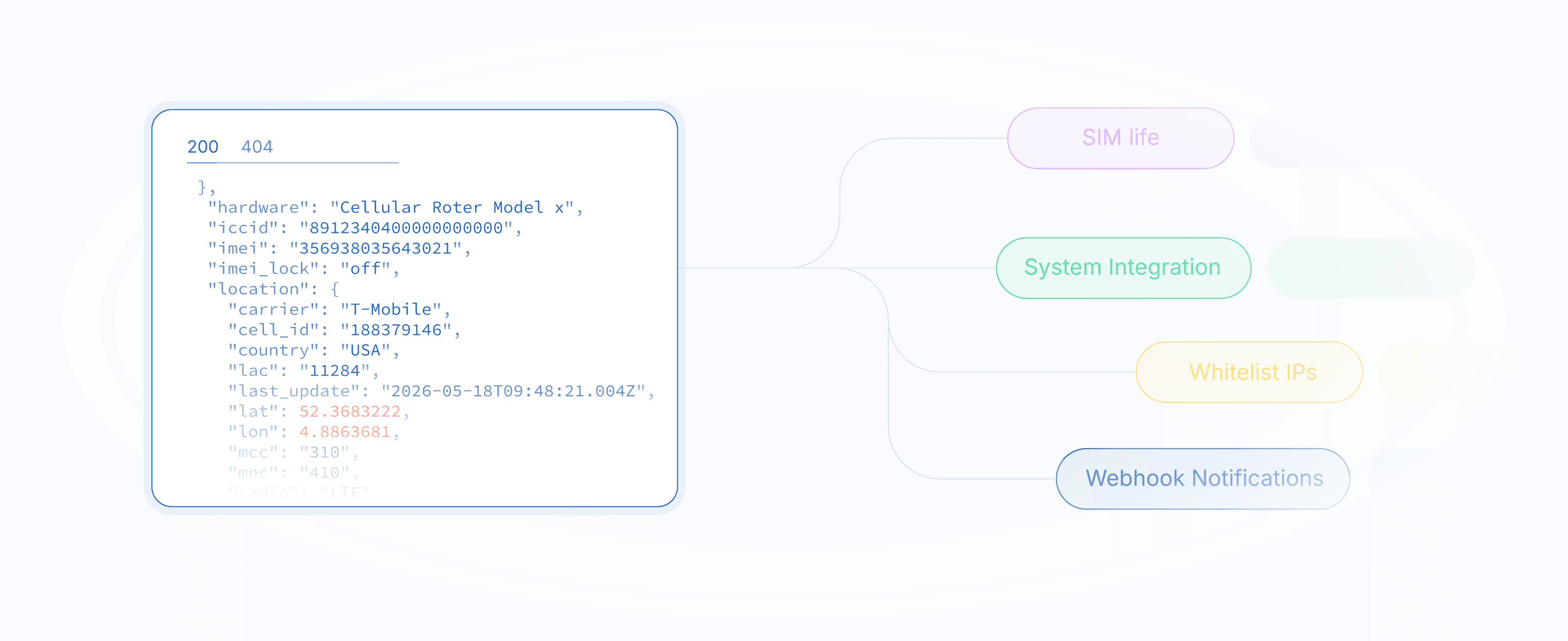
    Integrate Simbase with your existing MDM, UEM, ITSM, or asset management platforms to automate provisioning, lifecycle management, alerts, and connectivity workflows as devices are deployed, reassigned, or retired.

  • Pricing

    Connectivity that scales with your workforce.

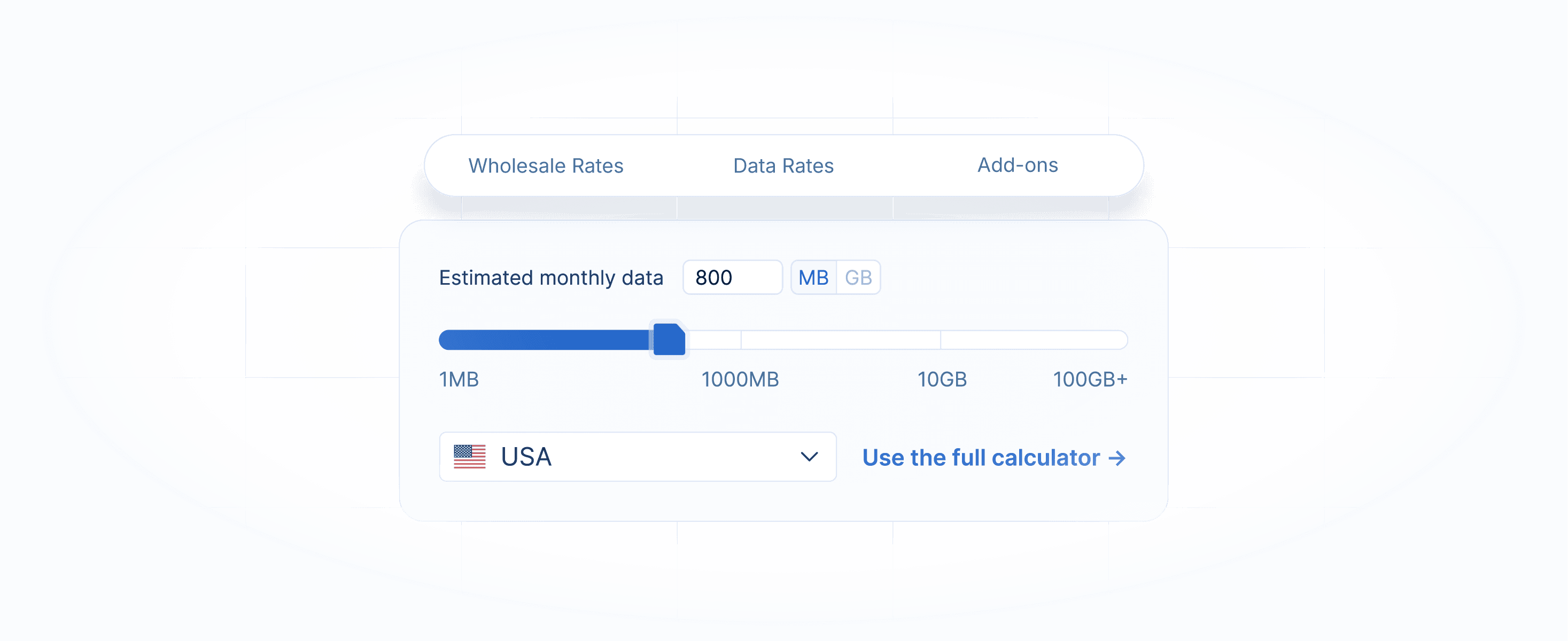
    Pay only for the devices that are active. Avoid long-term contracts, inflexible bundles, and unnecessary SIM costs while giving IT predictable, transparent pricing as deployments grow.

Technische specificaties

Ontworpen voor grootschalige implementaties op het gebied van bedrijfsmobiliteit

Form factors
Plastic SIM (2FF, 3FF, 4FF), industrial MFF2, and eSIM (eUICC) to support laptops, tablets, rugged handhelds, kiosks, and embedded enterprise devices.
Global connectivity
Multi-IMSI connectivity across partner mobile networks in 180+ countries with automatic network selection for reliable coverage while users and devices move between regions.
Supported networks
4G LTE and 5G connectivity, with compatibility across a wide range of enterprise-grade laptops, tablets, routers, and rugged mobile devices.
Network management
Centralized dashboard for provisioning, usage monitoring, diagnostics, SIM lifecycle management, and real-time connectivity insights.
API & integrations
REST API (OpenAPI 3.0) and webhooks for integrating connectivity with MDM, UEM, ITSM, asset management, and internal provisioning workflows.
Network options
Dynamic IPv4 by default, with Static IPv4, IPv6, private APN, and IPsec VPN available for deployments requiring secure private networking.
Security & access
Role-based user access, audit logging, and secure API authentication to support enterprise governance and operational control.
Deployment
Pre-provisioned SIMs or API-driven activation, with bulk ordering and flexible deployment workflows for large-scale rollouts.
Compliance
GDPR-compliant data processing with enterprise security controls and regional deployment options available.
Vergelijk de verschillende benaderingen

Hoe de connectiviteitsopties voor bedrijven zich tot elkaar verhouden

Kenmerken
Kenmerken
Simbase
Contract met een lokale mobiele netwerkoperator
Global management
One centralized platform
Separate portals and processes may be required by region
Network access
Multi-network connectivity
Direct access to a single carrier network
Provisioning
Dashboard, API, webhooks, and bulk actions
Often manual or dependent on carrier support
Per-SIM monthly minimum
No per-SIM monthly minimum
Commonly included in enterprise agreements
Contract flexibility
Month-to-month
Longer-term commitments are common
Diagnostics
Real-time connectivity visibility and diagnostics
Visibility varies by carrier and portal

Beoordelingen per 2026, gebaseerd op openbaar gemaakte plannen en feedback van gemeenschappelijke prospects. Gepubliceerd met het oog op transparantie, niet om iemand in diskrediet te brengen.

Ontworpen voor mobiliteit binnen de onderneming

Connectiviteit voor elk bedrijfskritisch apparaat

  • Field Service Operations

    Connected beyond the office.

    Keep technicians online with rugged tablets, handhelds, and laptops for inspections, work orders, and real-time reporting.

  • Mobile Workforce

    Work securely from anywhere.

    Connect employee laptops and tablets with reliable cellular access to business applications wherever work takes them.

  • Retail & Customer-Facing Devices

    Always-on customer experiences.

    Keep kiosks, mobile POS, and in-store devices connected with centralized monitoring and remote management.

  • Hardware Vendors & MSPs

    Connectivity built into your solution.

    Bundle global cellular connectivity into your hardware or managed service through one platform and API.

Woordenlijst

Termen in gewone taal

Enterprise mobility
The strategy and technology used to securely deploy, manage, and support mobile devices, applications, and connectivity across an organization.
MDM
Software used to enroll, configure, secure, and monitor mobile devices such as laptops, tablets, smartphones, and rugged handhelds.
UEM
A platform that extends device management beyond mobile devices to include laptops, desktops, wearables, and other connected enterprise endpoints.
eSIM / eUICC
A digital SIM that can be remotely provisioned and updated over the air, allowing organizations to activate or switch mobile network profiles without replacing a physical SIM.
Private APN
A private mobile network that isolates enterprise device traffic from the public internet, providing greater security and control over how connected devices communicate.
MFF2
An industrial-grade, soldered SIM designed to be permanently embedded into enterprise devices, offering greater durability and reliability than removable SIM cards.
Multi-IMSI
A SIM technology that stores multiple carrier identities, allowing devices to access supported mobile networks for improved coverage and more reliable connectivity across regions.
Zero-touch provisioning
A deployment process that allows devices and connectivity to be automatically configured with little or no manual setup before reaching the end user.
Device lifecycle management
The process of provisioning, deploying, monitoring, reassigning, supporting, and retiring enterprise devices throughout their operational life.
Static IP
A fixed IP address assigned to a device or SIM, making it easier to support secure remote access, firewall rules, VPNs, and other enterprise networking requirements.

Veelgestelde vragen

Mocht er nog een vraag onbeantwoord zijn, neem dan contact op met ons team; zij zullen deze graag voor u beantwoorden.

Can Simbase work alongside our existing mobile carrier?

Yes. Many organizations use Simbase alongside their existing carrier relationships. Whether you're supporting a pilot deployment, expanding into new regions, adding cellular backup, or connecting a specific fleet of devices, Simbase can complement your existing mobility strategy without requiring a complete carrier migration.

What types of enterprise devices does Simbase support?

Simbase supports a wide range of enterprise-connected devices, including laptops, tablets, rugged handhelds, kiosks, mobile POS systems, routers, gateways, digital signage, and other business-critical endpoints. Physical SIMs, industrial MFF2 SIMs, and eSIM (eUICC) are available depending on your hardware requirements.

How do we manage connectivity across multiple countries?

Simbase provides one centralized platform for managing connectivity across supported markets. Rather than maintaining separate carrier relationships, portals, and billing processes for each region, IT teams can provision SIMs, monitor usage, troubleshoot connectivity, and manage deployments globally through a single dashboard or API.

Can Simbase integrate with our existing IT tools?

Yes. Simbase offers a REST API and webhooks that allow you to integrate connectivity management with your existing MDM, UEM, ITSM, asset management, or internal provisioning systems. This helps automate device activation, lifecycle management, and operational workflows.

How quickly can new devices be activated?

Devices can be activated individually through the Simbase dashboard or in bulk using the API. Whether you're deploying ten devices or several thousand, connectivity can be provisioned to match your deployment workflow.

Can we suspend or reactivate devices when they're not in use?

Yes. Devices can be suspended and reactivated through the Simbase dashboard or API, making it easy to manage seasonal deployments, spare devices, employee turnover, or equipment that is temporarily out of service.

Can Simbase support both employee devices and shared devices?

Yes. Simbase supports connectivity for employee-assigned laptops and tablets, as well as shared devices such as kiosks, rugged handhelds, mobile POS systems, and other business-critical equipment managed by IT.

get started image

Houd de connectiviteit van je onderneming onder controle

Sluit bedrijfskritische apparaten aan, bied ondersteuning aan gebruikers in verschillende regio’s en beheer elke implementatie vanaf één platform.

    IoT-connectiviteit voor bedrijfsmobiliteit | IoT-simkaarten voor meerdere netwerken