Keep fleets connected. Keep riders moving.

Keep shared mobility fleets connected with resilient cellular connectivity that helps reduce downtime, simplify operations, and support growth across every market.

  • One SIM icon

    One SIM

    180+ countries · multi-network fallback

  • Form factor icon

    Any form factor

    2FF, 3FF, 4FF, MFF2, eSIM (eUICC)

  • Protocol icon

    Any protocol

    OCPP 1.6 · OCPP 2.0.1 · MQTT · TLS

  • Scale icon

    Any scale

    No per-SIM monthly minimums

The data reality

How much data does a connected vehicle actually use?

Every connected vehicle generates a constant stream of operational data. From GPS tracking and battery monitoring to ride events, diagnostics, and over-the-air firmware updates, data usage depends on how frequently vehicles communicate and how they're managed throughout the day. The examples below provide a general starting point for planning micromobility deployments.

Device type
Typical monthly data
What drives the usage
Shared e-bike
20-80 MB
GPS location, battery status, ride telemetry
Shared scooter
30-150 MB
Real-time tracking, diagnostics, firmware updates
Delivery scooter
100-300 MB
Fleet tracking, navigation, operational telemetry
Connected cargo bike
150-500 MB
Sensor data, diagnostics, remote management
Device type
Typical monthly data
Shared e-bike
20-80 MB
Shared scooter
30-150 MB
Delivery scooter
100-300 MB
Connected cargo bike
150-500 MB
Shared e-bike
Shared scooter
Delivery scooter
Connected cargo bike

Ranges are typical for European and North American deployments Simbase observes in production. Actual usage depends on OCPP implementation, telemetry cadence, and what's bundled with the charger (screen, camera, payment, DCS). Numbers should be validated against your own telemetry before committing to a plan.

Where micromobility connectivity falls short

Three connectivity challenges that slow fleet operations

Expanding into new markets shouldn't mean starting over

Growing into new cities or countries often means sourcing new SIMs, negotiating additional carrier contracts, and updating deployment workflows. A global connectivity strategy simplifies expansion and reduces operational complexity.

One network isn't enough for a moving fleet

Shared scooters, e-bikes, and delivery vehicles don't stay within perfect coverage. Multi-network connectivity helps vehicles maintain service as they move between coverage areas and changing network conditions.

Troubleshooting starts with visibility

When a vehicle goes offline, it's important to know whether the issue is the SIM, the cellular network, the modem, or the vehicle itself. Real-time connectivity insights help operations teams identify and resolve issues more quickly.

What Simbase gives you

A connectivity platform built for fleet operators.

  • Multi-IMSI · eSIM

    One connectivity strategy for every fleet.

    Deploy across cities and countries with automatic access to supported carrier networks, helping vehicles stay connected as they move through changing coverage conditions.

  • Fleet visibility in real time.

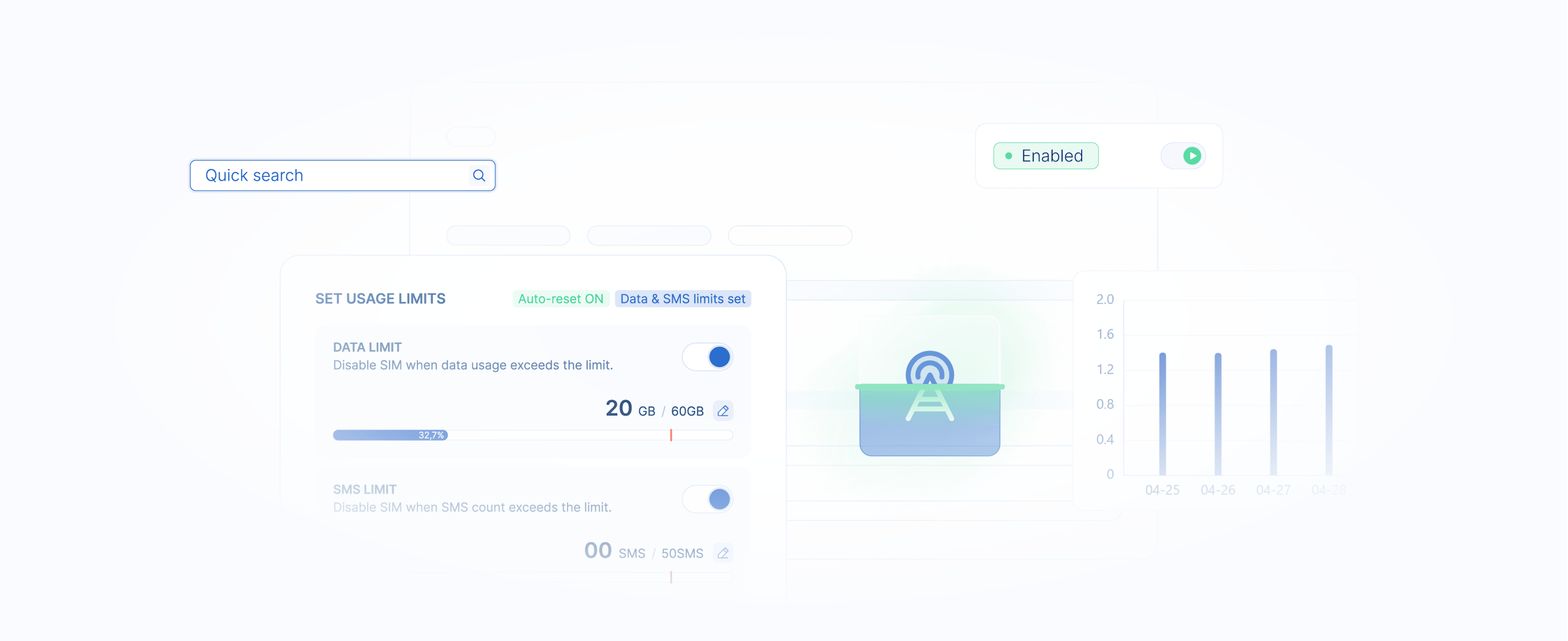
    Monitor SIM status, data usage, signal quality, and connectivity health across thousands of connected vehicles from one centralized dashboard with real-time insights to help identify and resolve issues faster.

  • API · Webhooks

    Integrate connectivity into your fleet platform.

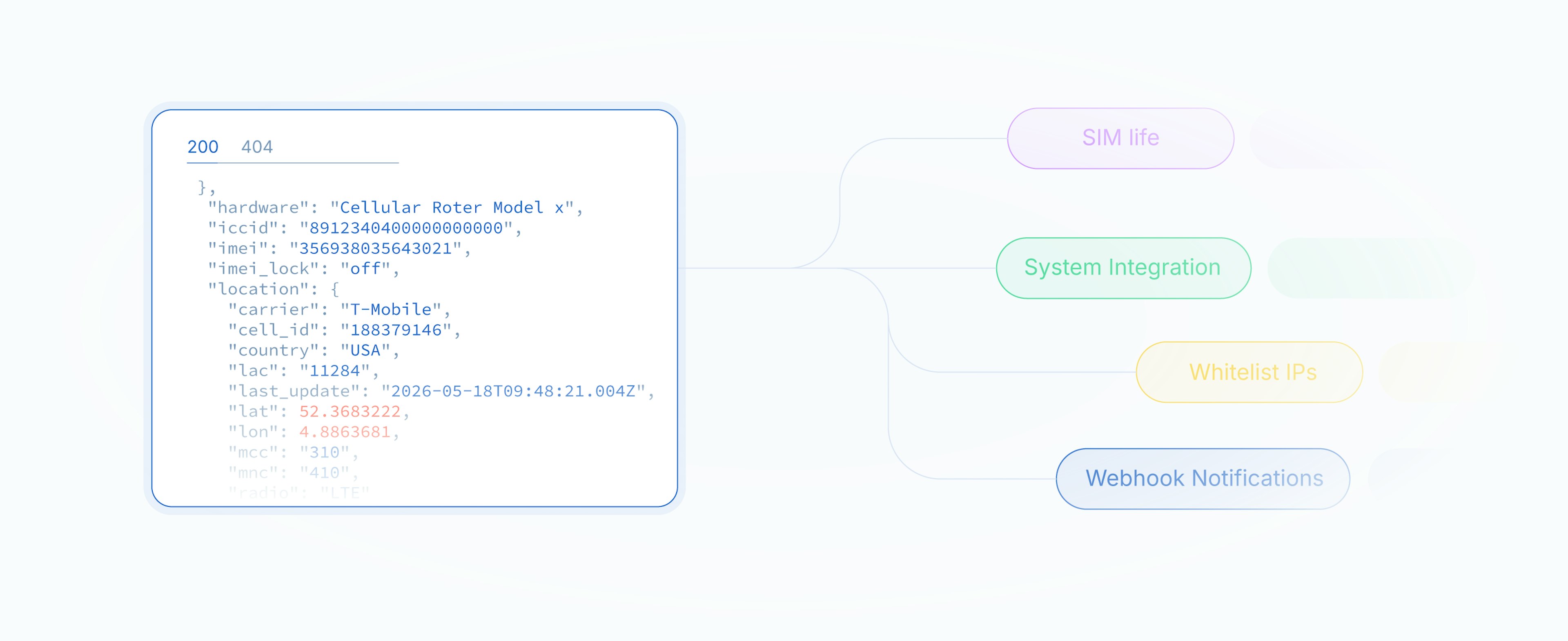
    Connect Simbase with your fleet management platform, operations tools, or internal systems to automate provisioning, alerts, and connectivity management.

  • Pricing that grows with your fleet.

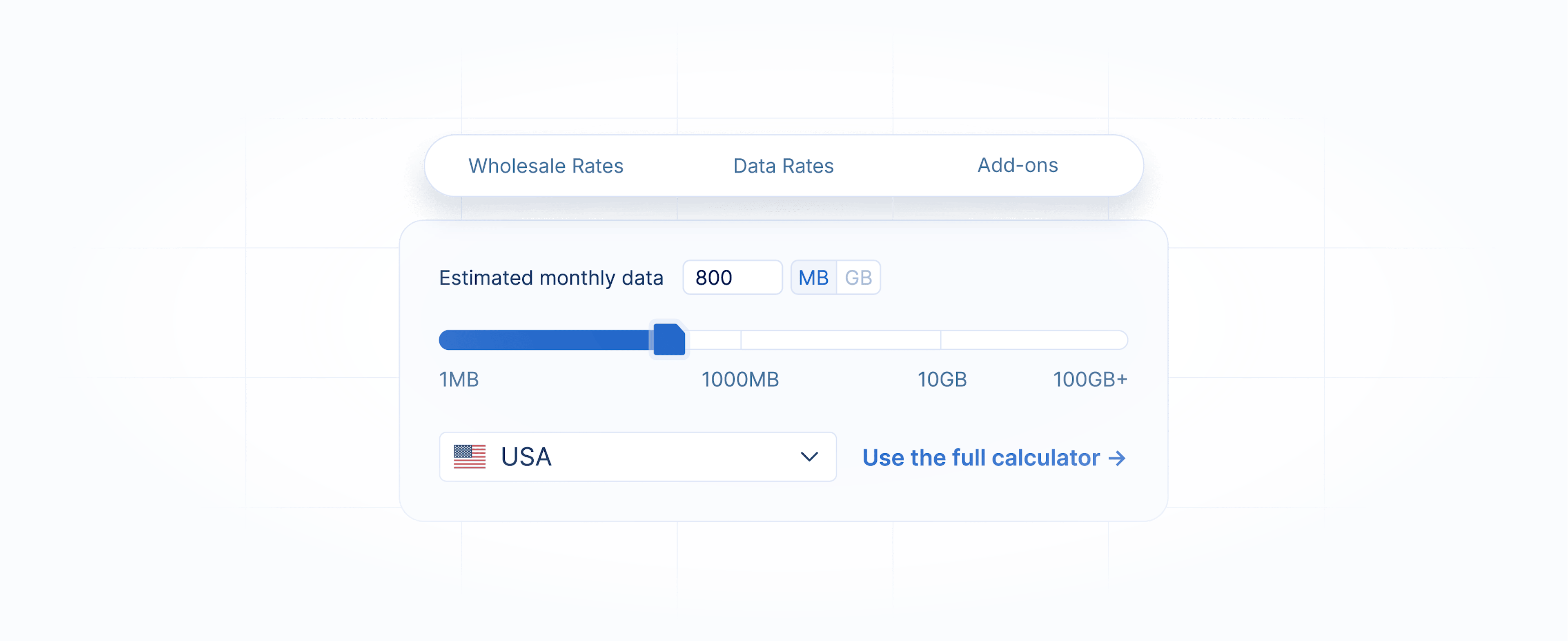
    Whether you're launching in a new city or expanding globally, flexible pricing helps you scale without long-term contracts or per-SIM monthly minimums.

Technical specifications

Built for connected fleet deployments

Form factors
Available in plastic SIM (2FF, 3FF, 4FF), industrial MFF2, and eSIM (eUICC) to support shared scooters, e-bikes, delivery vehicles, and embedded fleet hardware.
Global connectivity
Multi-IMSI connectivity across partner mobile networks in more than 180 countries, with automatic network switching where supported to help vehicles stay connected throughout their journeys.
Network support
Supports 2G, 3G, 4G LTE, LTE-M, NB-IoT, and 5G, providing compatibility across a wide range of connected fleet devices and telematics hardware.
APIs & integrations
Manage SIMs, automate provisioning, and integrate connectivity into fleet management platforms using REST APIs, webhooks, and a centralized dashboard.
Network options
Dynamic IPv4 by default, with Static IP, IPv6, Private APN, and VPN options available for deployments requiring additional security or network control.
Security & compliance
GDPR-compliant with EU-based data processing. Data residency options and enterprise security features are available for organizations with specific compliance requirements.
Deployment
Order SIMs ready for installation or activate devices during deployment through the Simbase platform or API. Bulk provisioning simplifies large-scale fleet rollouts.
Compare approaches

How your connectivity options compare.

Features
Features
Simbase
Local MNO contract
Multi-network connectivity
Multi-IMSI access across supported partner networks
Typically tied to one carrier per country
Global fleet deployments
One SIM strategy across multiple markets
Separate SIMs, plans, or agreements may be required by country
Fleet management
Self-service dashboard, REST API, and webhooks
Portal and API capabilities vary by carrier
Per-SIM monthly minimum
No per-SIM monthly minimums
Minimum commitments may apply
Contract flexibility
Month-to-month options available
Longer-term agreements are common
Fleet visibility
Centralized status, usage, and connectivity insights
Visibility varies by carrier and platform
Scaling into new markets
Deploy new fleets without changing your connectivity platform
Expansion often requires additional carrier relationships and operational processes

Assessments as of 2026, based on publicly advertised plans and feedback from shared prospects. Published for transparency, not to disparage.

For whom

Built for every stage of micromobility.

  • OEMs

    One hardware platform. Every market.

    Integrate a Simbase SIM during manufacturing and deploy the same hardware globally. Configure connectivity by region from a single platform.

  • Fleet Operators

    One dashboard. Every vehicle.

    Monitor connectivity across every scooter, e-bike, or moped from one platform. Diagnose issues remotely, reduce downtime, and keep your fleet operating without switching between carrier portals.

  • Fleet Management Platforms

    Connectivity built into your platform.

    Integrate Simbase with your fleet management software to automate SIM provisioning, monitor usage, receive connectivity alerts, and surface diagnostics directly within your existing workflows.

  • Shared Mobility & Delivery

    Expand into new cities with confidence.

    Launch new markets without replacing hardware or managing additional carrier relationships. One connectivity platform simplifies expansion across every fleet deployment.

Glossary

Plain-language terms.

Vehicle telematics
The collection and transmission of vehicle data, including location, battery status, diagnostics, and performance, using onboard sensors and cellular connectivity.
OTA updates
Software or firmware updates delivered remotely over a cellular connection, eliminating the need for physical access to the vehicle.
GNSS
A satellite-based positioning system that provides accurate location, navigation, and timing data for connected vehicles and assets. GPS is one example of a GNSS.
eSIM / eUICC
An embedded SIM technology that allows network profiles to be remotely downloaded and managed without physically replacing the SIM.
Fleet Management Platform
Software used to monitor, manage, and operate connected vehicle fleets. These platforms typically provide location tracking, vehicle status, maintenance insights, and fleet analytics from a centralized dashboard.
MFF2
A soldered, industrial-grade SIM form factor designed to be permanently embedded into connected devices for improved durability and long-term reliability.
Multi-IMSI
A SIM technology that can access multiple mobile network profiles, helping connected vehicles stay connected by switching between supported networks when coverage changes.

Frequently Asked Questions

If any of your questions remain unanswered, reach out to our team to answer them for you.

What is an IoT SIM card for micromobility?

Unlike consumer SIM cards, IoT SIMs are designed for connected vehicles. They support remote management, global deployments, multi-network connectivity, and long operational lifecycles.

Can one SIM work across multiple countries?

Yes. Simbase provides a single SIM that automatically connects to supported carrier networks across more than 180 countries.

Can I manage thousands of vehicles?

Yes. The Simbase dashboard and API let you activate, suspend, troubleshoot, and monitor individual SIMs or entire fleets.

Can I monitor connectivity remotely?

Yes. The Simbase dashboard provides visibility into SIM status, data usage, and connectivity across your fleet. Combined with APIs and webhooks, teams can quickly identify issues and integrate connectivity insights into their existing fleet management workflows.

Which micromobility devices are supported?

Simbase supports a wide range of connected micromobility devices, including shared scooters, e-bikes, mopeds, cargo bikes, delivery vehicles, GPS trackers, and other embedded IoT hardware that uses cellular connectivity.

get started image

Connectivity built for fleets that never stop moving.

Launch new markets faster, simplify fleet operations, and manage connectivity across every vehicle from one global platform.